Direction
Tony Silvino (Éveha – UMR 5138, Archéologie et Archéométrie)
Pedro Pereira (CITCEM – Université de Porto)
How Eveha Participates
Archaeological investigations
Management
Location
Portugal

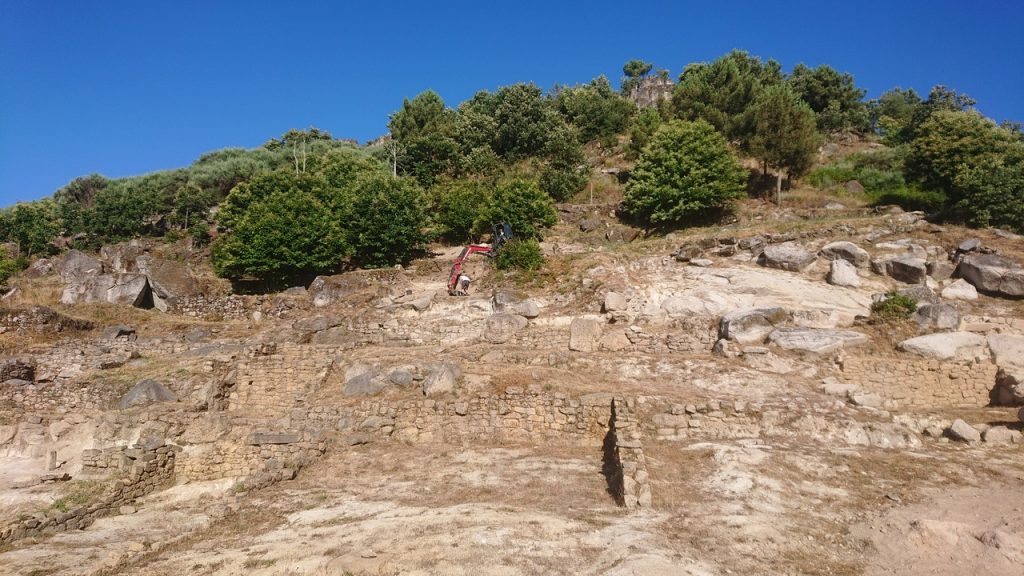
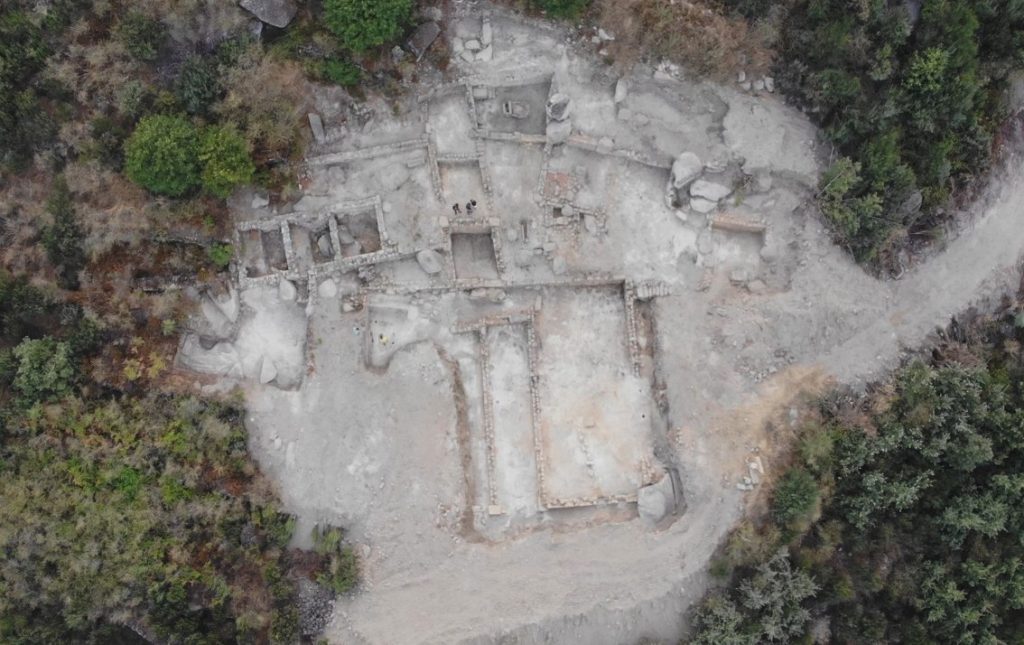
The numerous campaigns carried out on this site since 2012 have revealed an agricultural establishment set up at the end of the 1st century AD and abandoned in the second half of the 3rd century. The remains uncovered relate to a rural farm combining different types of activities: livestock farming, grain processing, textile work (probably flax) and wine production. The latter remains unique in this region, straddling two provinces (Tarraconensis and Lusitania), as it is the oldest proven evidence in the Douro Valley. It was probably the economic part of a villa-type settlement. The site was reoccupied during the 4th century, either by reusing certain areas of the old farm or by creating new, rather crude buildings. Traces of an older occupation have also been observed. These consist of a large terrace wall dating from the 4th-3rd centuries BC.
The 2021 excavation campaign made it possible to complete the plan of certain areas of the Early Empire establishment, in particular the sheepfold and the adjoining warehouse. The wine-making complex was completed by a second dolia cellar. Information was also gathered on the adjacent periods. A large rectangular pit revealed the existence of a series of “cigar”-shaped hearths, the fill of which yielded a series of weights and spindle whorls, attesting to textile work. These structures may date back quite far (Iron Age?). The remains from late antiquity were also well documented with the discovery of two areas, one of which yielded several small coin hoards.