Direction
Louise Purdue (CNRS, CEPAM-UMR 7264, Université Nice Sophia Antipolis)
How Eveha Participates
Malacology
Location
Sultanate of Oman and Unites Arab Emirates

The fieldwork campaign conducted in December 2017 was part of the second year of the ANR OASIWAT project. The Eveha International collaborator, a geoarchaeologist specializing in malacology, contributed to the paleoenvironmental component of the project.
Following the campaign to establish paleoenvironmental reference collections, new sectors were explored to collect additional subfossil assemblages and thus expand the geographical study area. To this end, new test pits were excavated in the Emirate of Ras al-Khaimah. These excavations focused on the heart of the Dhayah Oasis, and a test sounding was also undertaken in the Shimal Oasis during this same mission.
Excavations in the Dhayah Oasis
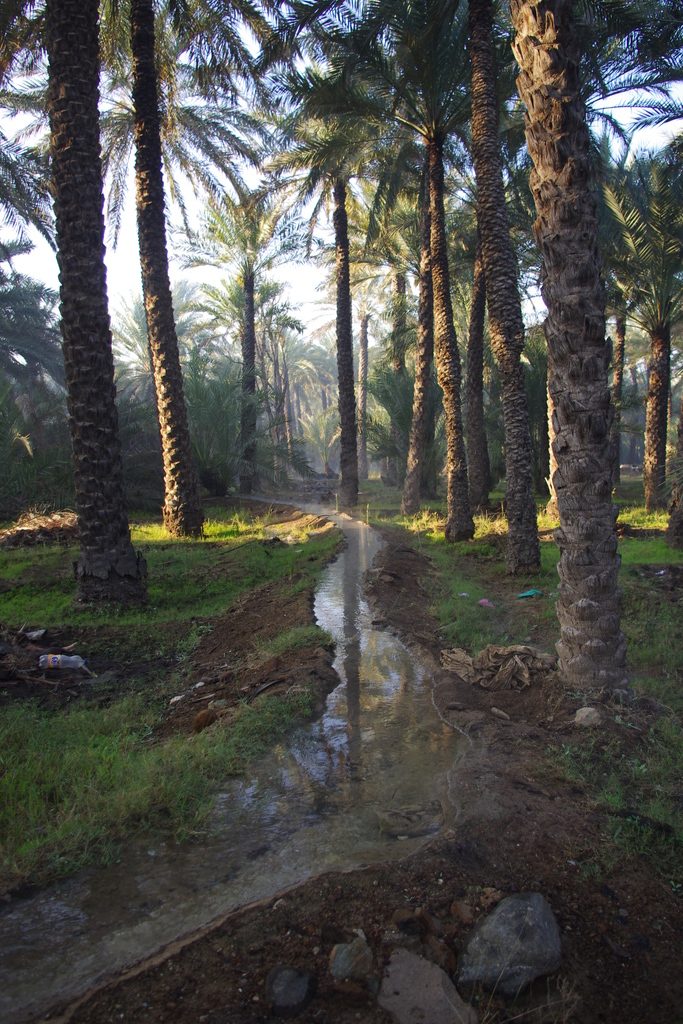
The Dhayah Oasis is located in a small enclave bordered to the west by mangroves and to the east by the limestone reliefs of the Hajar Mountains. This study area was selected due to the presence of archaeological remains highlighting ancient occupation, such as the Iron Age fortress (1300 to 600 BC) which still overlooks the oasis.
Our collaborator sampled five test pits (TP 1, 2, 4, 6, and 9) as well as three stratigraphic logs (1, 3, and 10) south of Dhayah.
Test Sounding in the Shimal Oasis
To the south of the Dhayah Oasis lies a large alluvial fan, formed by several wadis flowing from the Hajar Mountains, notably Wadi Bih and Wadi Haqil. This area is archaeologically known for housing ancient remains (notably from the Umm an-Nar period, 2700–2000 BC). The high archaeological and geomorphological potential of this sector justified a subsurface survey of this oasis during the December 2017 campaign.
Our collaborator contributed to the opening of a sounding approximately 3.30 m deep at the northern end of the distal part of the fan. The resulting profile (or section) allowed for a wide range of paleoenvironmental and geoarchaeological analyses (pedology, micromorphology, geochemistry, malacology, phytoliths, radiocarbon, and OSL dating).