Direction
Blandine Besnard (Eveha International)
Ghassan Nagagreh (University Dar al-Kalima Bethléem)
How Eveha Participates
Study of Archaeological Artifacts
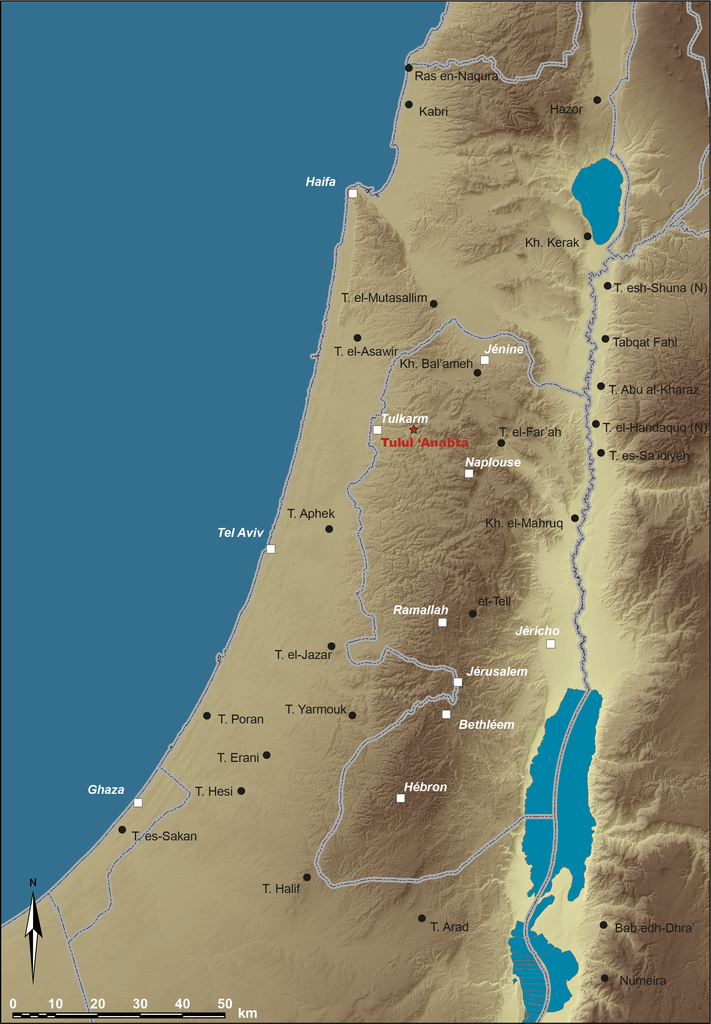
Location
Palestine
Fieldwork context
In 2025, as security conditions at the Tulul ‘Anabta archaeological site prevented field operations, a study mission was organized—in agreement with the Consulate General of France in Jerusalem—to process and analyze the material stored at the Palestinian Department of Antiquities in Ramallah.
Research questions and objectives of the mission
The main objective of the study season conducted in Ramallah in 2025 was to analyze the material recovered from the 2021–2023 excavation campaigns through a chrono-functional and socio-economic lens. The results obtained now allow for an integrated reading of the proto-urban site of Tulul ‘Anabta and clarify its role within the Early Bronze Age II dynamics of the central West Bank.
Results
1. Pottery material
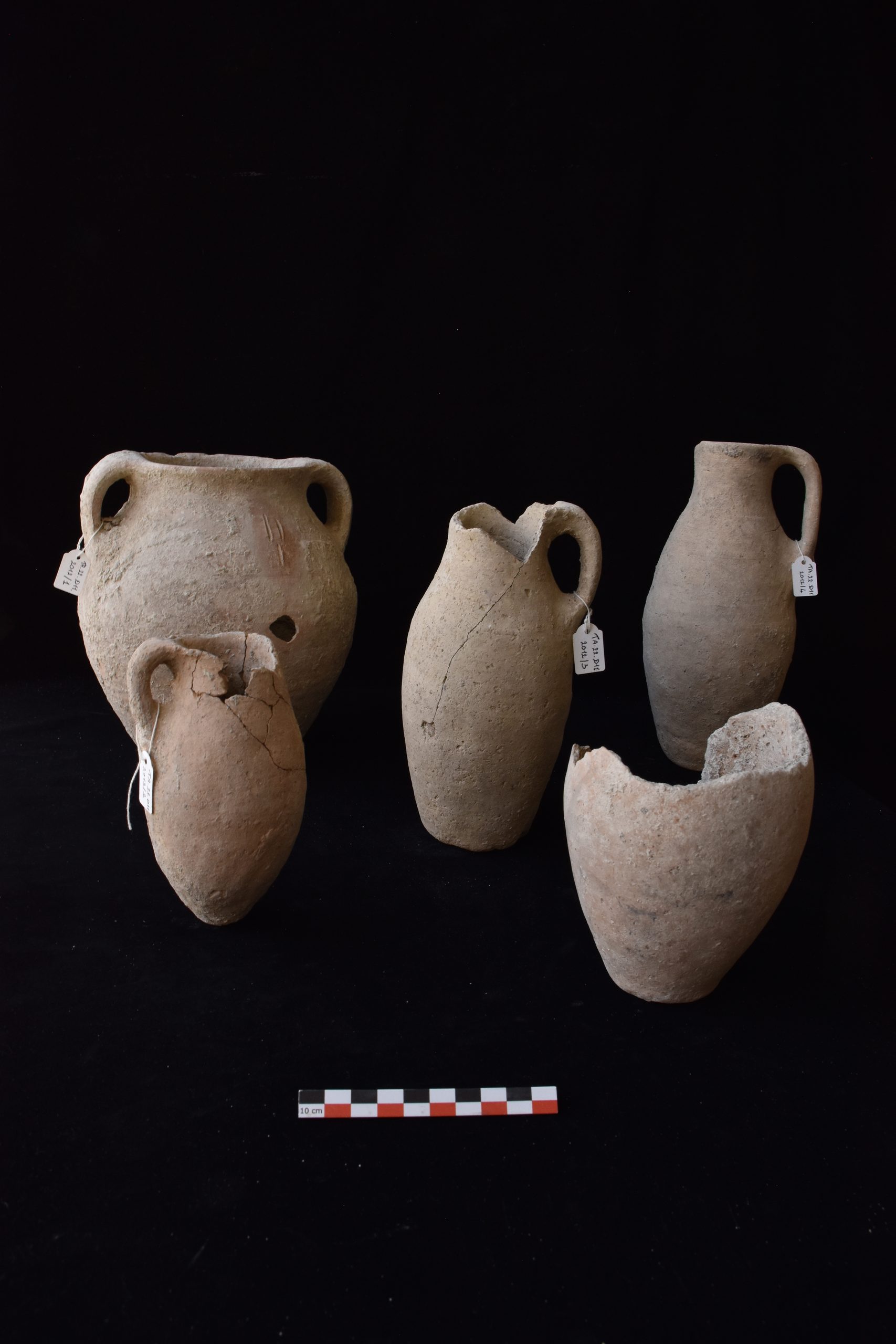
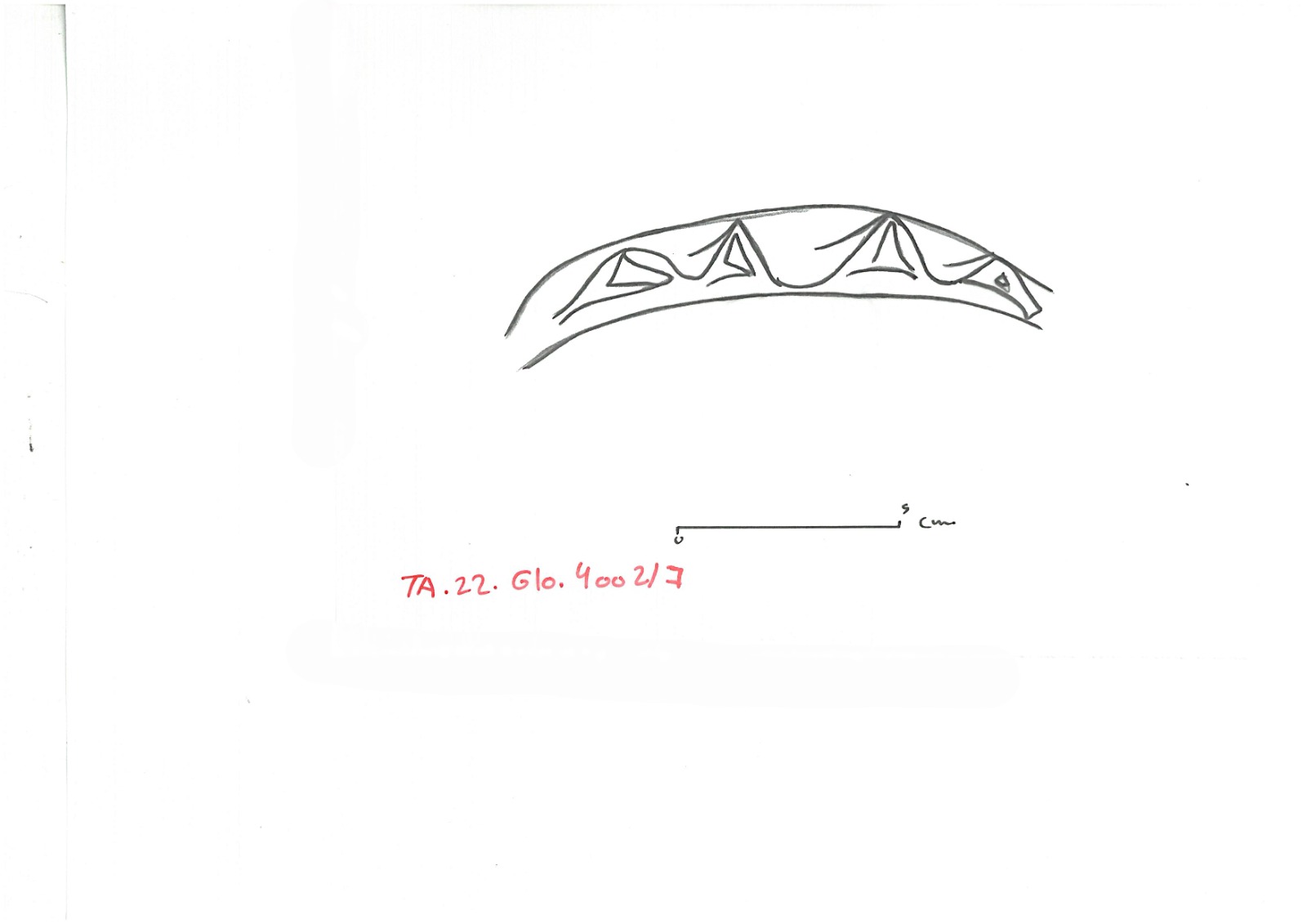
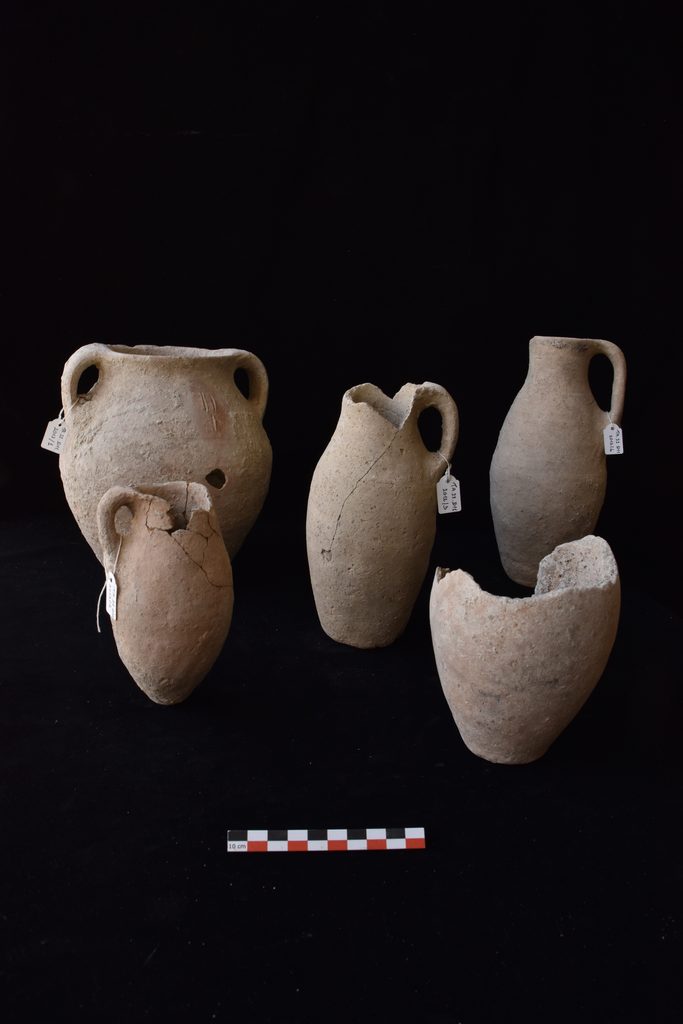
The study by Maura Sala (independent researcher) focused on 616 diagnostic sherds from selected stratified contexts across the four sectors. The assemblage is characterized by very strong typological and technological homogeneity, confirming an occupation mostly dated to the Early Bronze Age II (3000–2800 BCE). The dominant forms match the classic repertoires of Southern Levant fortified sites: simple carinated bowls, globular short-necked jars, jugs, and small open forms. The presence of miniature vessels in Building B.21 of Sector 2 (a monumental structure) supports the interpretation of a cultic or communal function for the building. Fabrics are predominantly local and well-refined, showing consistent oxidizing firing. The almost total absence of later material confirms the purity of the sequence. Sounding C10, however, revealed an underlying earlier phase marked by Late or transitional EBA I forms, testifying to a modest prior occupation before the EBA II monumentalization.
2. Lithic industry and ground stone tools
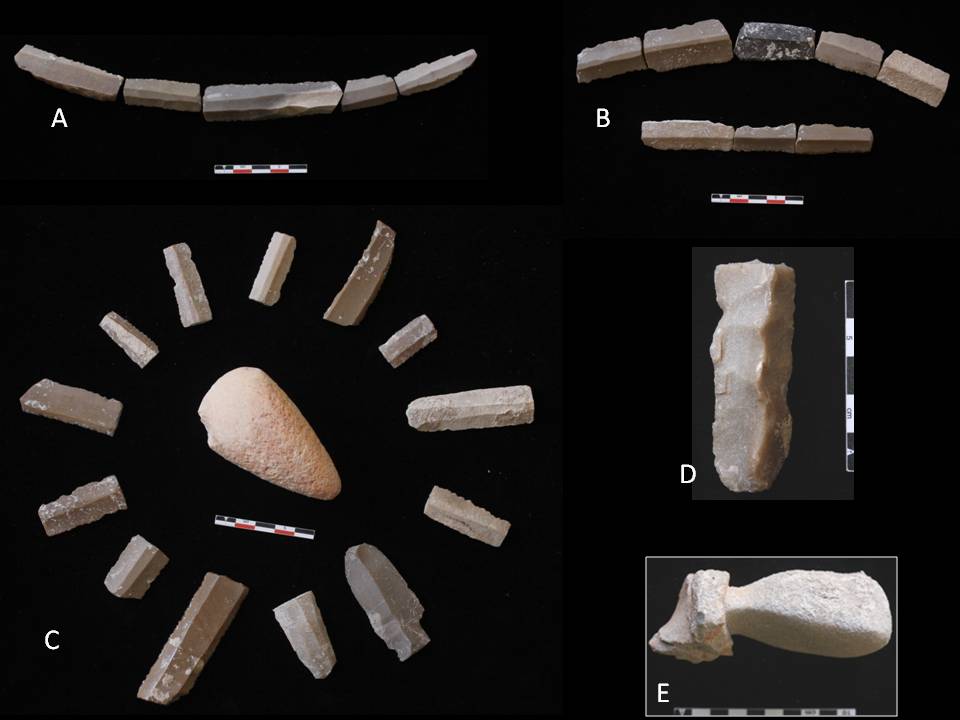
The analysis carried out by Florine Marchand (University of Liège) highlights abundant blade production (117 large blades), associated with composite sickles exhibiting macroscopic sickle gloss indicative of agricultural use. Raw materials are local (beige and brown flint), with controlled knapping revealing advanced technical skill. Identified tools include scrapers, denticulates, piercers, and arrowheads, testifying to diverse activities (harvesting, woodworking, domestic craft processing). The export of 22 pieces will allow for detailed microwear analysis. This corpus suggests specialized local production integrated into an agro-pastoral economy.
Several fragments of limestone grinding stones, mortars, and basins were identified, mainly in domestic contexts. These elements bear witness to grinding and food-processing activities. Their spatial distribution confirms the residential function of Sector 3 and parts of Sector 4.
3. Faunal remains
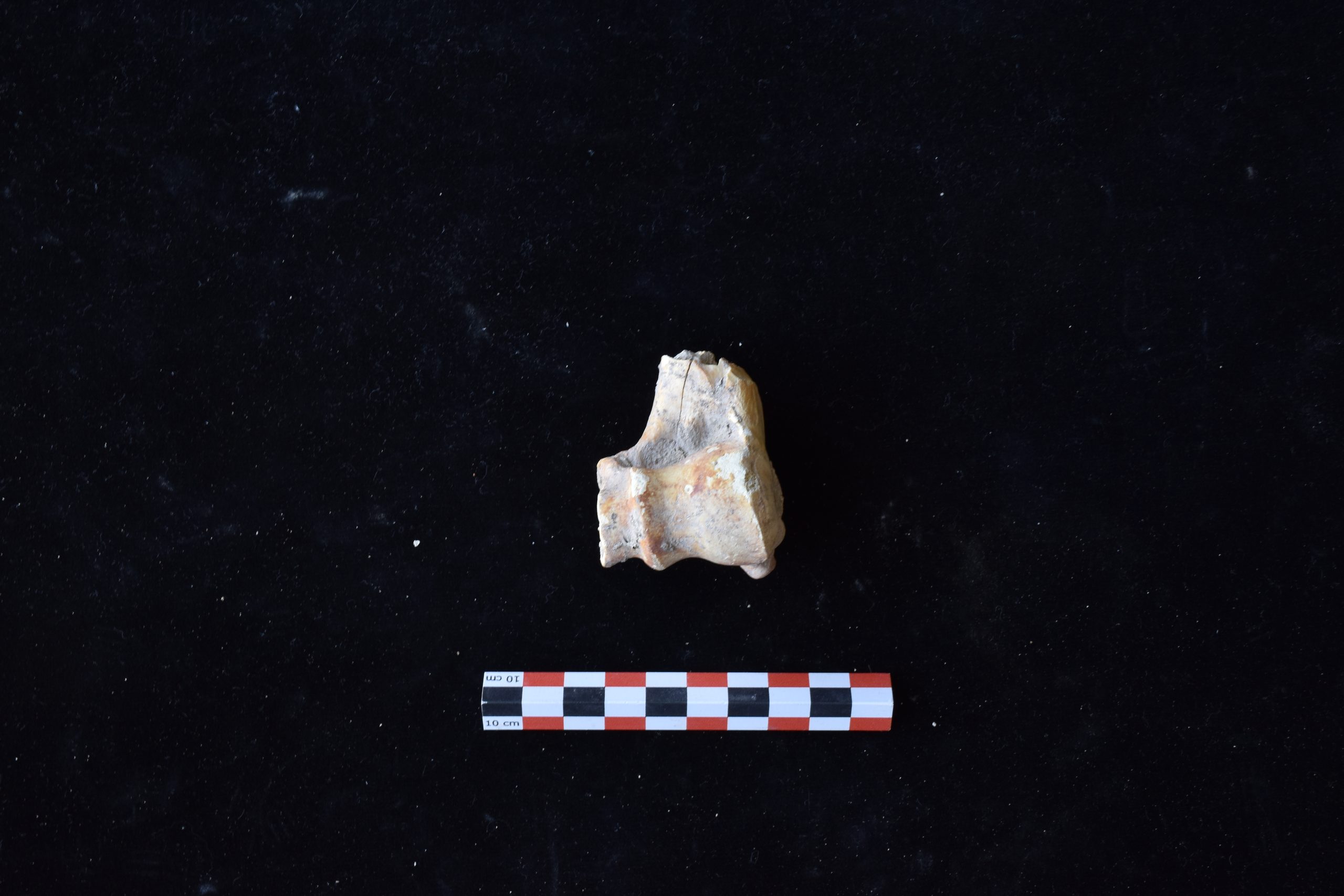
The very high identification rate (94%) allowed for a reliable interpretation of economic practices, thanks to the expertise of Tara Accart (Archéopole, Lille). The spectrum is dominated by caprines (sheep/goats), indicating a structured pastoral economy. Cattle are present in secondary but constant proportions, testifying to a mixed exploitation strategy. Cut and butchery marks demonstrate local consumption and on-site processing. A few traces of bone working suggest craft activities. Contexts associated with ovens and cisterns yield assemblages consistent with EBA II domestic refuse.
4. Environmental remains (in progress)
Samples were exported by Hussein Madina (Paris I University) to refine the reconstruction of the botanical landscape and agricultural practices. Although the results are not yet available, the presence of sickles with harvesting gloss and macro-remains associated with ovens already points to a cereal economy complementary to livestock farming.
5. Architectural study and building reconstruction
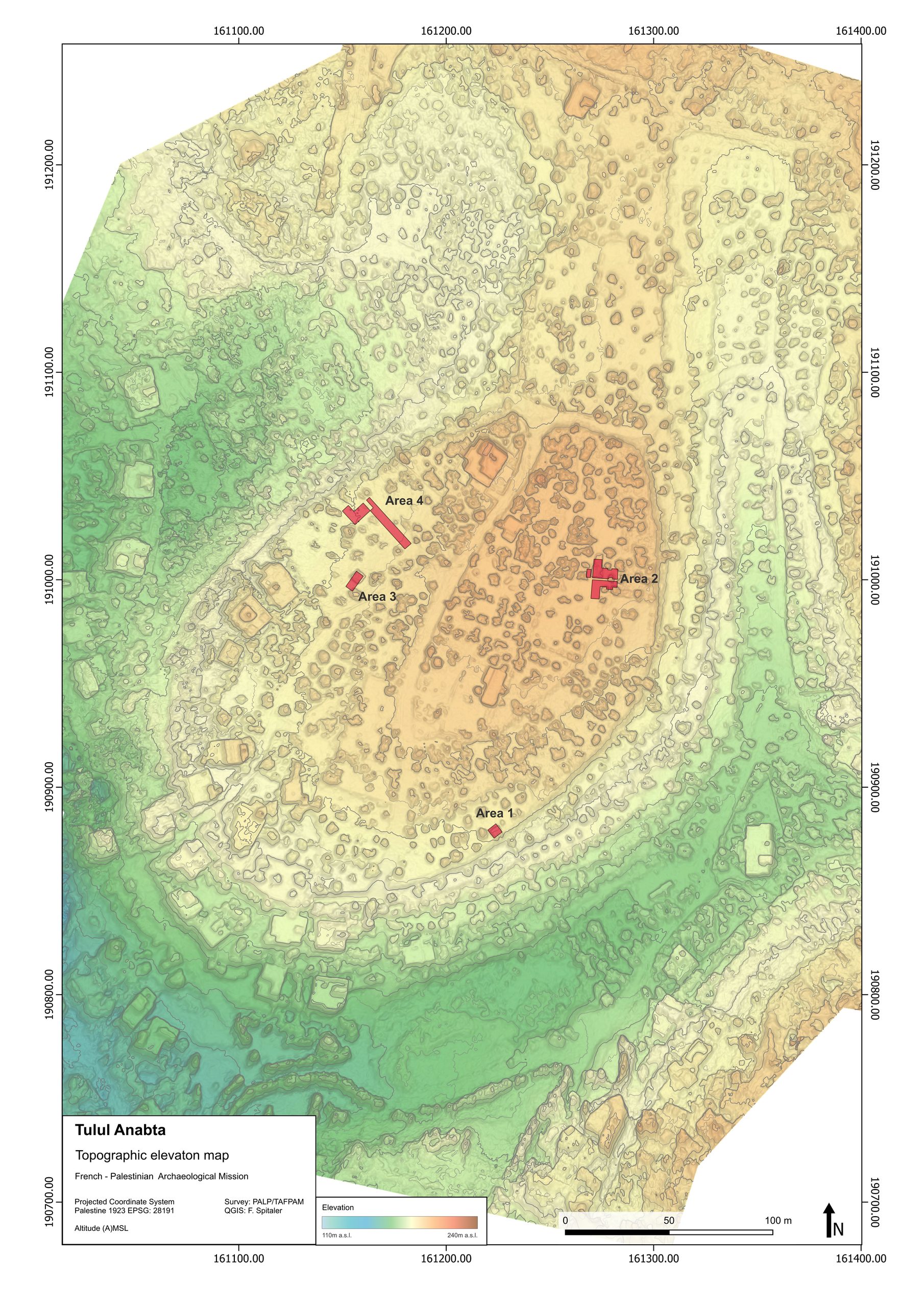
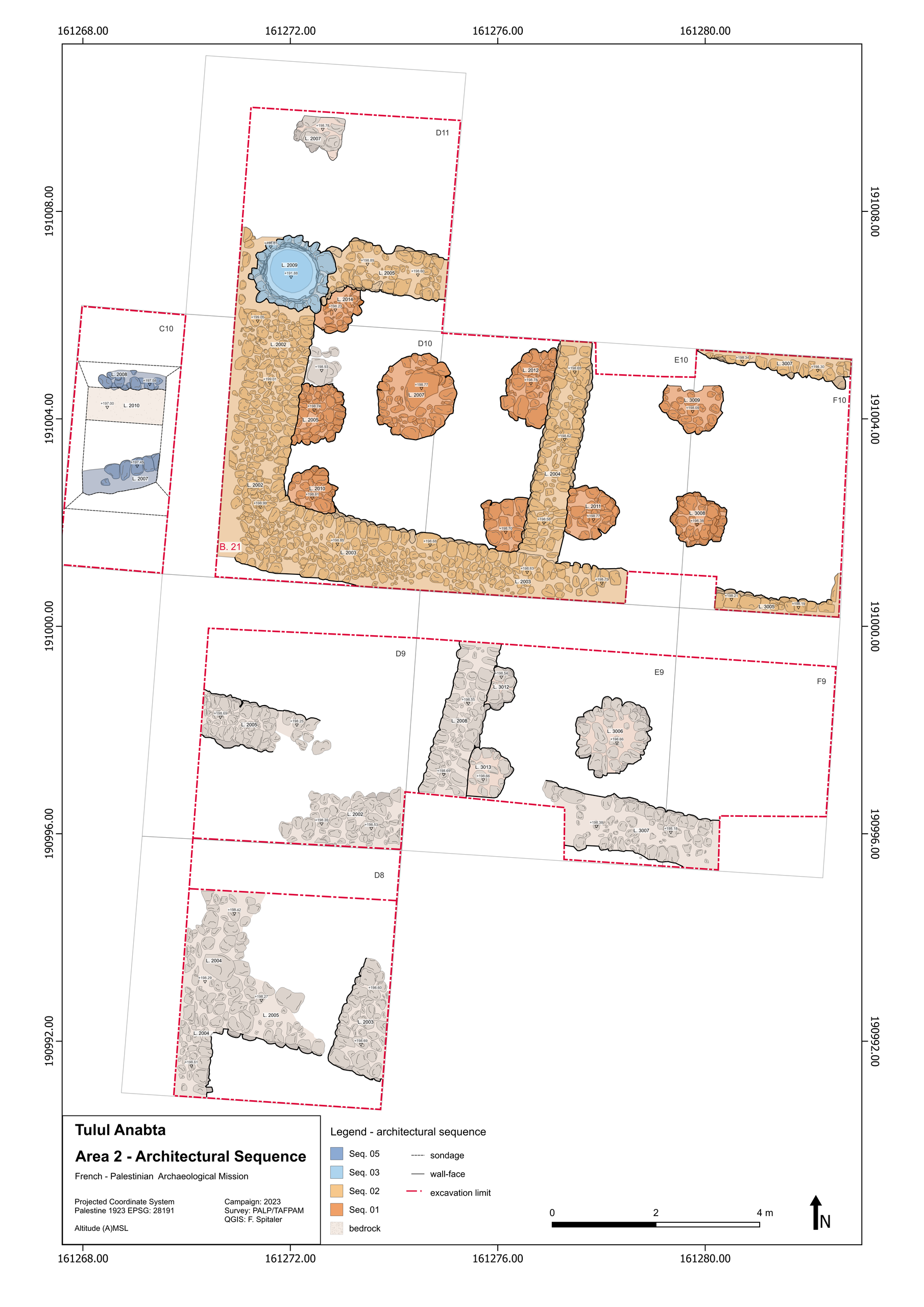
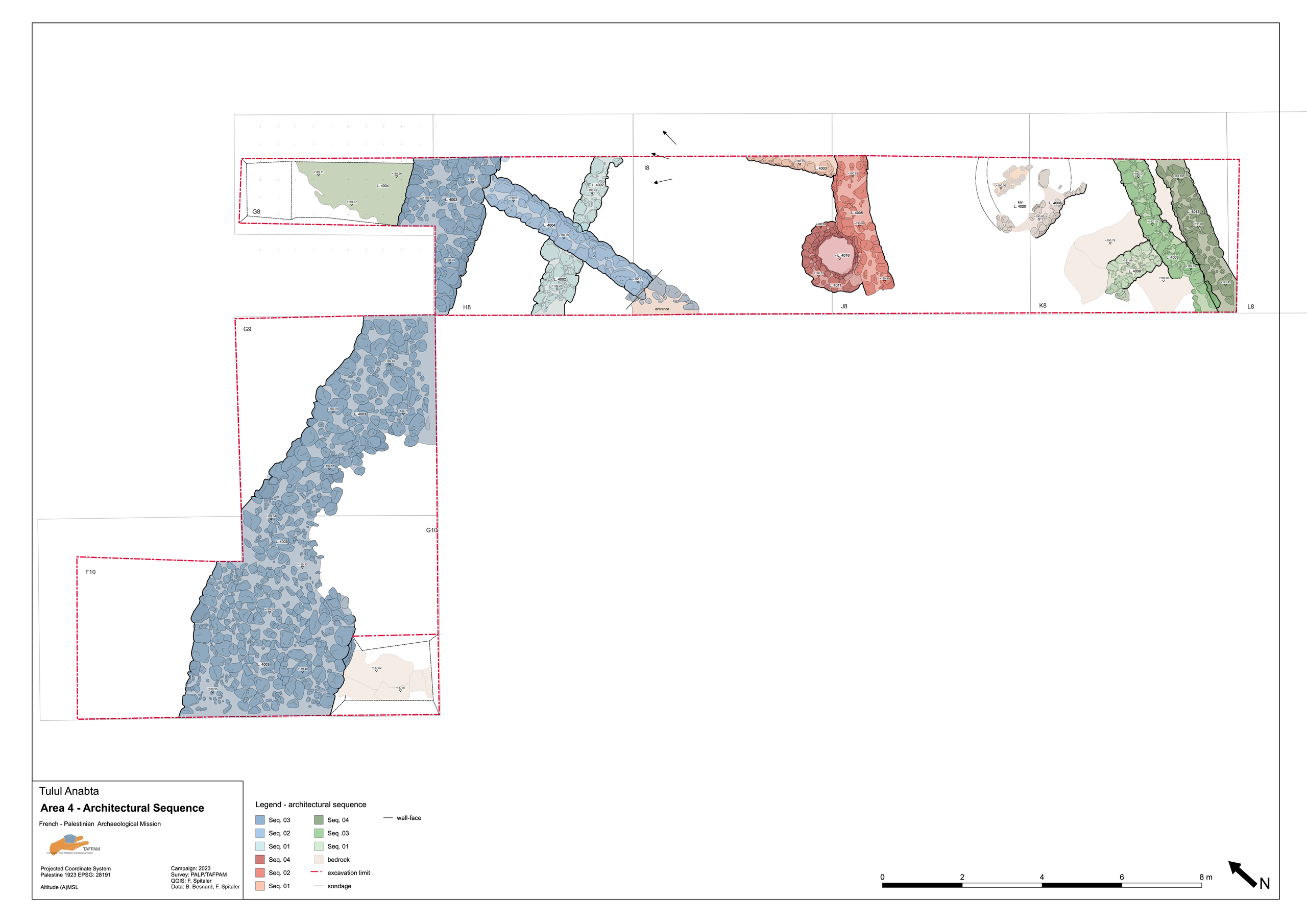
A reassessment of the architectural data from the 2021–2023 campaigns was carried out by Fabian Spitaler (University of Vienna) in collaboration with Blandine Besnard. The photographic surveys were reprocessed using photogrammetry to produce georeferenced orthophotographs of Sectors 2 and 4 and to reconstruct dismantled structures. This phase enabled:
- the creation of the first standardized plans;
- the clarification of stratigraphic relationships between walls and water management features;
- the identification of specific construction techniques;
- the confirmation of a structured urban organization (fortifications, monumental building, domestic housing).
These results form the basis for the site’s future GIS and confirm the architectural coherence of the EBA II occupation.
6. General synthesis and conclusions
The 2025 study season marked a decisive step toward a comprehensive understanding of the site of Tulul ‘Anabta, enabling a cross-analysis of the material recovered from the 2021–2023 excavations alongside the first standardized architectural reconstruction of the main sectors.
The results converge toward a clear and now solid attribution of the site to the very beginning of the 3rd millennium BCE. The homogeneity of the ceramic, lithic, and faunal assemblages confirms a coherent and synchronized occupation corresponding to a structured, small fortified town. The monumental building in Sector 2, associated with exceptional hydraulic installations, testifies to a complex community organization and a high level of technical expertise. Deep cisterns identified in Sectors 2 and 4 point to planned water management integrated into the urban fabric.
The domestic finds and zooarchaeological study reveal a stable agro-pastoral economy largely based on caprine herding, complemented by agricultural activities attested by blade tools (sickles) and ground stone grinding equipment. These data confirm that Tulul ‘Anabta represents a permanently inhabited center rather than a temporary occupation.
The photogrammetric processing of the architectural remains in Sectors 2 and 4 enabled, for the first time, the integration of all field data into a coherent mapping system, highlighting a hierarchical spatial organization: a monumental peripheral fortification, a central building with a public function, and internal domestic areas. The identification of several internal construction phases, all within the EBA sequence, suggests a gradual evolution of the site rather than a single foundation event.
Finally, the presence of an earlier occupation confirms a transition process from a pre-existing settlement into a fortified urban entity. Tulul ‘Anabta thus emerges as a major landmark for documenting the emergence of secondary urban centers in the Wadi ash-Sha’ir valley during the early 3rd millennium BCE.
Despite the impossibility of resuming fieldwork in 2025, this study season succeeded in consolidating the site’s chrono-cultural, economic, and architectural foundations, providing a robust scientific framework for continuing the project as soon as field conditions permit.