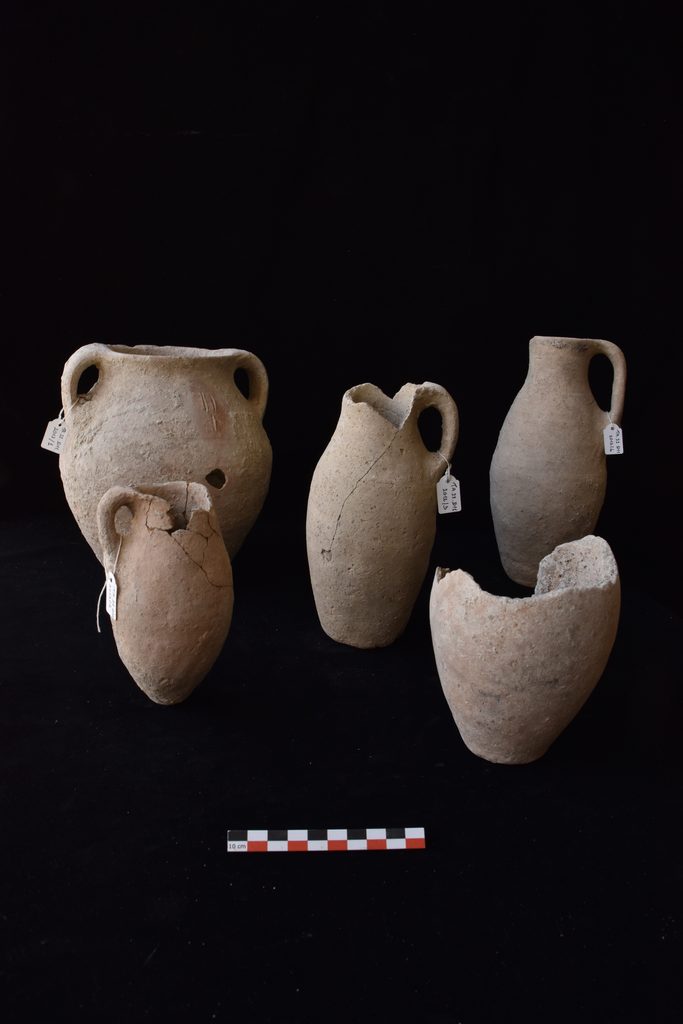
The archaeological excavations conducted at the Tullul Anabta site were carried out by the Éveha International research firm under the direction of Blandine Besnard as part of the planned excavation project led by Ghassan Nagagreh (Dar al-Kalima University in Bethlehem).
Direction
Ghassan Nagagreh (Dar al-Kalima University in Bethlehem)
How Eveha International Participates
Archaeological excavations
Location
Palestine
Location of the Operation
The TAFPAM archaeological program is conducted at the site of Tulul ‘Anabta, located in the Tulkarm Governorate, in northern West Bank (Palestine), within Area A as defined by the Oslo Accords. The site is situated near the town of Anabta, in a region characterized by the rolling hills and valleys of the western foothills of the central highlands. In 2025, a study mission was organized in Ramallah to analyze and document the archaeological material from previous excavation campaigns stored at the Palestinian Department of Antiquities.
Research History
The 2021–2023 excavations led by W. Abu Azieh (then with IFPO) revealed that Tulul Anabta is a major site for understanding urbanization in the southern Levant during the 3rd millennium, featuring fortifications, monumental buildings, domestic spaces, and water systems. Combined with data from surveys conducted in the 1970s, these discoveries indicate that the site was a fully developed urban center during the Early Bronze Age (EBA, 3700–2500). However, without an analysis of the material remains, several questions remained unanswered: the exact chronology (EB I, II, or III), the typology and techniques of pottery and stone tools, the subsistence economy, and the organization of craft and food production activities.
Partners
Ministère de l’Europe et des Affaires étrangères
Institut français du Proche-Orient (IFPO), CNRS (laboratoire Archéorient UMR 5133) Dar al-Kalima University in Bethlehem
Link :
Mission Website